The Bottleneck Is Never Where You Think It Is
Your bottleneck is probably not where you think it is. Most operators pick the loudest problem, the station with the most complaints, or the process that feels the slowest. They invest there. And throughput does not move. Goldratt's Five Focusing Steps exist to prevent exactly this mistake. They force you to find the real constraint before you spend a dollar improving anything.
The Mistake That Keeps Repeating
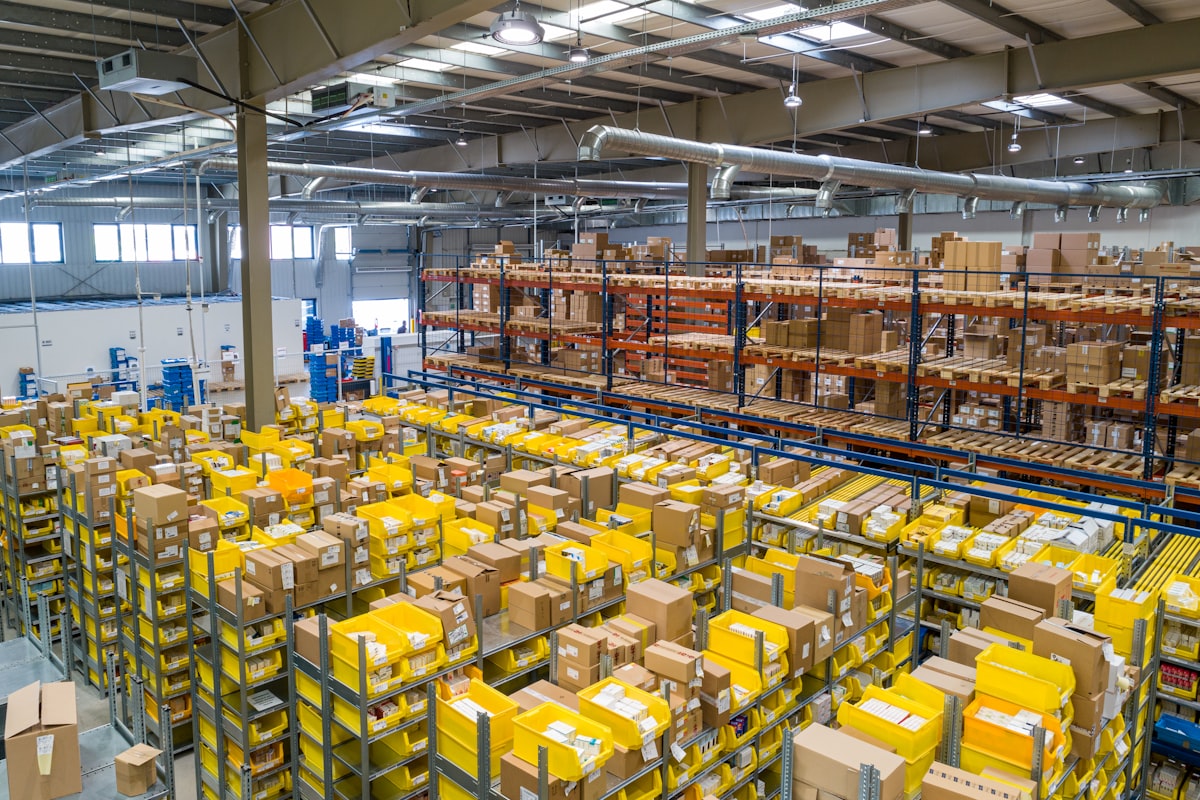
Imagine a fulfillment center where orders are consistently late. The ops team watches packers scrambling every shift. The queue in front of packing stations is always full. Management concludes that packing is the bottleneck and approves a major investment: new stations, additional headcount, an upgraded conveyor feed.
Months later, throughput has not changed. Orders are still late. The packing stations are faster, but the queue in front of them is just as long. The problem has not moved because packing was never the constraint.
This pattern plays out constantly in distribution, manufacturing, and fulfillment operations. The visible pain point (a crowded station, a stressed team, a long queue) draws attention and budget. But the visible pain point is usually a symptom of a constraint somewhere upstream.
In Goldratt's novel The Goal, the same lesson appears when Alex Rago discovers that a single machine (the NCX-10) and a single worker (Herbie, the slowest boy scout on the hike) determine the pace of the entire system. Everything downstream looks busy and backed up, but the real limitation is one upstream step that nobody was measuring.
The Five Focusing Steps Applied
Goldratt's method catches this pattern reliably. Here is how it works.
Step 1: Identify the constraint. Walk the process end to end. Do not ask where people feel busy. Ask where work piles up in front of a station, not inside it. If inventory is stacking up in staging areas before receiving, receiving is your candidate. If pick carts are sitting idle waiting for orders to release, your order management system may be the bottleneck. The lowest-throughput step in the chain is your constraint. Measure it.
Step 2: Exploit the constraint. Before adding resources, squeeze everything you can from the current constraint. Stagger inputs so the constraint gets a steady flow instead of batched surges. Remove non-essential tasks from the constraint step. Move inspections or approvals to a post-constraint step if they can happen later without quality risk. Operators who do this routinely find 15-25% more throughput at the constraint with zero capital investment.
Step 3: Subordinate everything else to the constraint. Downstream processes should operate on the constraint's rhythm, not their own. If receiving processes 200 units per hour and picking can handle 300, do not schedule pick waves for 300. You will create phantom waves where pickers walk to locations with no stock. Align every step to the pace of the bottleneck.
Step 4: Elevate the constraint. If exploiting is not enough, invest. Add capacity at the constraint, and only at the constraint. This is the one place where spending money directly increases system throughput. Investing anywhere else adds capacity that the system cannot use.
Step 5: Repeat. Once you elevate, the constraint moves. Go back to Step 1. Do not let inertia keep your attention on the old bottleneck. The policies you created to subordinate to the previous constraint may now be the thing slowing down the new one. This is the part most teams skip. They solve one bottleneck and declare victory while the system quietly stalls at the next one.
Why Your Intuition Fails
Your intuition about the bottleneck fails for a predictable reason. You notice the station that looks the busiest or generates the most complaints. But a busy station downstream of the real constraint is busy because work arrives in irregular batches. It is reacting to the constraint, not causing the throughput limitation. Goldratt called these UDEs (Undesirable Effects). They are symptoms, not root causes. Treating a UDE as the constraint is how you end up investing in a problem that does not exist.
Inversion helps here. Instead of asking "what is slow?", ask "if I doubled capacity at this station, would total system throughput increase?" If the answer is no, it is not your constraint. Doubling capacity at a non-constraint changes nothing because the system can never feed it fast enough. Doubling capacity at the actual constraint changes everything.
Monday Morning Action
This week, walk your process end to end. Not a conference room exercise. Walk the floor, the workflow, the pipeline. At each step, measure two things: the throughput rate (units per hour) and the queue depth in front of it (work waiting to enter). The step with the lowest throughput rate and the highest upstream queue is your candidate constraint. Write it down.
Then ask the inversion question: if you doubled capacity at that step, would overall output increase? If yes, you have found your bottleneck. Do not invest anywhere else until you have exploited it. Stagger inputs, remove non-essential tasks from the constraint, and subordinate downstream steps to its pace.
For a related framework on where to cut costs without destroying throughput, see Why Most Cost-Cutting Fails.
The Five Focusing Steps are not complicated. The hard part is resisting the urge to fix what feels broken instead of what is actually limiting throughput.